
Preparação de aulas de idiomas com IA para professores.
Cada aula, tecida pra você.
Estamos construindo o Telar: deixe seu e-mail e entraremos em contato no lançamento.
Plano de curso
165 aulas
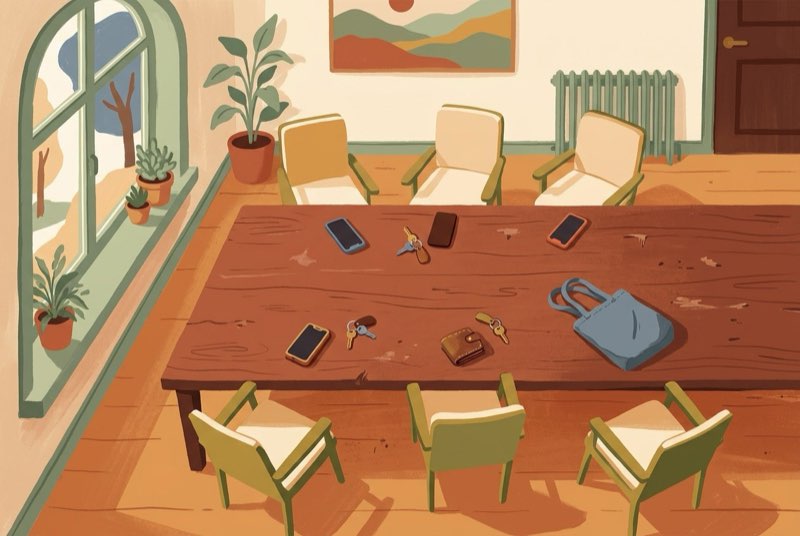
After the meeting: things on the table
Listen to Ana and Ben two times. Then answer the questions with your partner.
Ana: It's Maria's phone. Her name is on it — her first name and her last name.
Ben: And the bag?
Ana: Her bag is here too. And this is Tom's wallet.
Preparar um curso dá trabalho.
O currículo, as aulas de cada nível, o material de cada aula. Você faz tudo isso sozinho, para cada curso.
Um curso do A1 ao C2 montado pelo Telar teve 165 aulas no plano.
Currículo
Passos 1 e 2
Você descreve o curso uma vez. O Telar monta o currículo e o plano de curso por nível.
Aulas de cada nível
Passos 3 e 4
Você escolhe as aulas e acompanha cada fase. Você revisa antes de dar a aula.
Material de cada aula
Passo 5
A aula vira material.
Você descreve o curso uma vez.
A língua, os níveis e quem são seus alunos. Nenhuma tela depois pergunta de novo.
- A língua, o sistema de níveis e os níveis do curso.
- A faixa etária e a língua materna dos alunos.
- Quantas aulas cada nível terá: já vem preenchido e dá para mudar.
- Todas as aulas leem esta descrição.
Espanhol, do A1 ao C2, alunos adultos que falam português.
Vou ter que repetir tudo a cada aula? Não. Nenhuma tela depois pergunta de novo.
O Telar monta o currículo e o plano de curso por nível.
Do A1 ao C2, com plano de curso e aulas para cada nível. Você parte do seu currículo ou de um currículo pronto que você adapta. Num curso do A1 ao C2 montado pelo Telar, o plano teve 165 aulas.
- Seis níveis, do A1 ao C2, cada um com seu plano e suas aulas.
- Organizado por nível de idioma, não por etapa escolar.
- Você parte do seu currículo ou de um pronto que adapta.
- Dá para acrescentar níveis depois.
A1 30 · A2 33 · B1 36 · B2 30 · C1 22 · C2 14: 165 aulas.
O plano vem fechado? Não. Você corrige um item e vê quais aulas ele muda antes de qualquer coisa rodar.
Plano de curso
165 aulas
Você escolhe as aulas e acompanha cada fase.
O Telar prepara as aulas do plano e mostra em que fase cada uma está. Dá para parar e continuar depois.
- Você escolhe uma aula ou várias do plano.
- Cada aula mostra a fase em que está: planejar, verificar o plano, escrever as atividades, verificar a aula.
- Dá para parar e continuar depois.
- O preço de cada ação aparece no botão antes de gerar.
O item “Possessive Adjectives and Possessive 's” saiu em duas aulas de 60 minutos: Gramática e Conversação.
E se eu precisar parar no meio? Dá para parar e continuar depois.
Criando sua aula
- 1.✓Planejando as etapas
- 2.✓Verificando o plano de aula
- 3.✓Revisando o plano de aula
- 4.✓Escrevendo as atividades
- 5.✓Verificando a aula
- 6.✓Revisando a aula
Possessive Adjectives and Possessive 's
Gramática
60 min · 8 etapas · 11 atividades
Conversação
60 min · 8 etapas · 8 atividades
Você revisa antes de dar a aula.
Cada aula chega com uma lista do que vale olhar. Você corrige ou mantém como está. O Telar prepara. Você revisa e dá a aula.
- Cada aula chega com a lista do que vale olhar.
- Uma observação abre o motivo de ter sido levantada.
- Você corrige ou mantém, mas uma aula com problema bloqueante não pode ser mantida como está.
- Um item errado do currículo pode ser corrigido, com as aulas afetadas mostradas antes.
Posso confiar sem ler? O Telar não pede isso. O Telar prepara. Você revisa e dá a aula.
Possessive Adjectives and Possessive 's
✓ AceitaAceita como está, com 2 observações.
60 min · 8 etapas · 11 atividades
- 1 · Aquecimento · Discussão6 min
- 2 · Contexto · Imagem5 min
- 3 · Exposição à língua · Texto6 min
- 4 · Apresentação · Explicação · Exemplo8 min
- 5 · Prática controlada · Lacunas9 min
- 6 · Prática guiada · Associação · Pergunta10 min
- 7 · Produção · Discussão · Pergunta10 min
- 8 · Fechamento · Pergunta6 min
Precisa de uma aula fora do curso?
A forma mais simples: uma aula avulsa, a partir do tópico e do tema que você escolhe.
- Uma aula sem montar curso: o jeito mais simples de começar pequeno.
- Sai uma aula com observações para revisar e com PDF, slides, imagem e áudio, como qualquer aula de um curso.
Turma de espanhol B1 amanhã: tópico “adjetivos possessivos”, tema “o que ficou na sala depois da reunião”.
Preciso montar um curso para ter uma aula? Não.
Nova aula
Língua ensinada
Sistema de níveis
Nível
Tópico
Tema: a situação da aula
Faixa etária
Língua materna
Público (opcional)
A aula vira material.
Cada aula sai em PDF e em slides, com imagens e áudio, e pode ter lição de casa.
- PDF e slides de cada aula.
- Imagem e áudio gerados pelo Telar.
- Lição de casa opcional: você escolhe os tipos de exercício, os objetivos e a duração, pede mudanças em palavras ou gera de novo.
Aula 5 do inglês A1: a imagem “After the meeting: things on the table”, um trecho de áudio de Ana e Ben de cerca de 11 segundos, a página do PDF com as mesmas falas e uma lição de casa de dez frases para completar.
O áudio é de verdade? É voz gerada, e a legenda diz: “Áudio gerado pelo Telar.”
After the meeting: things on the table
Listen to Ana and Ben two times. Then answer the questions with your partner.
Ana: It's Maria's phone. Her name is on it — her first name and her last name.
Ben: And the bag?
Ana: Her bag is here too. And this is Tom's wallet.
Imagem e áudio gerados pelo Telar.
Complete each sentence with one word: my, your, his, her, its, our or their.
Listen to Ana and Ben two times. Then answer the questions with your partner.
Ana: It's Maria's phone. Her name is on it — her first name and her last name.
Ben: And the bag?
Ana: Her bag is here too. And this is Tom's wallet.
Complete each sentence with one word: my, your, his, her, its, our or their.
Gere os arquivos da aula.
As imagens e os áudios de cada aula saem do próprio Telar. Você gera o que falta e vê cada arquivo ficar pronto.
- A imagem e o áudio são arquivos separados, cada um com seu estado: faltando, gerando, pronto.
- Você gera só o que falta e pode gerar de novo.
Quem fez essa imagem e esse áudio? O Telar. As legendas dizem isso.
Mídia
2 de 2 arquivos prontos
Todos os arquivos estão prontos.
Etapa 2 · ImagemAfter the meeting: things on the tableProntaVeja uma aula do catálogo.
O catálogo de lançamento terá currículos prontos de inglês e de espanhol, do A1 ao C2, para quem fala português, com duas aulas por item.
- Objetivos, 16 palavras novas, 4 retomadas e oito etapas que somam 60 minutos.
- O mesmo item em duas versões: Gramática e Conversação.
A aula é genérica? Leia uma de verdade: objetivos, palavras e atividades, etapa por etapa. E o currículo pronto você adapta.
Possessive Adjectives and Possessive 's
A aula
60 min · 8 etapas · 11 atividades
Ao final da aula, os alunos serão capazes de
- Say your name and other people's names with possessive adjectives: 'My name is...', 'Her name is...'
- Say who something belongs to with possessive 's: 'It's Ana's phone'
- Choose his or her according to the owner, not the object
Palavras novas
Retomadas
6 min
minutos 0–61 · Aquecimento
Discussão
Activate what learners already say to identify people, before possessive adjectives are introduced.
Discussão · em duplas6 min
Work in pairs.
Talk about the people in your team.
- Who is in your team? Say a first name and a last name. Your partner answers: "He's Marco. She's Ana."
5 min
minutos 6–112 · Contexto
Imagem
Establish the situation: belongings left on the table after a team meeting.
Imagem · em grupos5 min
Imagem gerada pelo Telar.
6 min
minutos 11–173 · Exposição à língua
Texto
Read a short dialogue in which colleagues come back and say whose belongings are on the table.
Texto6 min
After the meeting
The meeting is over. Ana comes back to the table. ANA: Oh, my phone is here. And my keys. MARCO: Where are the others? ANA: They're in the office. MARCO: OK. Ana, is this your wallet? ANA: No, it's not. My wallet is in my bag. MARCO: Then it's Ben's wallet. Ben, is this your wallet? BEN: Yes, it's my wallet. Thank you, Marco. ANA: And this phone? It's Carla's phone. Her name is on it. MARCO: Carla is in her car. BEN: And this bag? Is it your bag, Ana? ANA: No, it's Carla's bag. BEN: This is Tom's key. ANA: Yes, it's his key. And his bag is here too. MARCO: OK. Let's go to the office.
8 min
minutos 17–254 · Apresentação
Explicação · Exemplo
Understand the form, meaning and use of the possessive adjectives and of possessive 's.
Explicação · em grupos5 min
Possessive adjectives: my, your, his, her, its, our, their
A possessive adjective shows who something belongs to: my, your, his, her, its, our, their.
The adjective follows the owner, not the thing. For a man: his phone. For a woman: her phone.
Use our for you and your team, and their for two or more people.
Use its for a thing or a company: the company and its name.
| owner | adjective |
|---|---|
| I | my |
| you | your |
| he | his |
| she | her |
| it | its |
| we | our |
| they | their |
- This is Marco and his phone.
- This is Ana and her phone.
- We are a team, and this is our office.
In Portuguese the same word covers both his and her. In English you must choose from the owner: his for a man, her for a woman.
Exemplo · em grupos3 min
Names and 's
- My first name is Ana. My last name is Silva. my
- His first name is Marco. His last name is Rossi. his
- Her first name is Carla. Her last name is Dias. her
- This is Ana's bag. Ana + 's
- That is Marco's car. Marco + 's
9 min
minutos 25–345 · Prática controlada
Lacunas
Rehearse the possessive adjectives and 's in writing, where accuracy is the goal.
Lacunas · individualmente9 min
Complete each sentence with one word: my, your, his, her, its, our or their.
In sentences 5, 6 and 8, use a name with 's. Example: Ana's.
- Hi. I am Ben. This is ___ phone.
✓ my
- You are Ana. Is this ___ phone?
✓ your
- Marco is here. This is ___ wallet.
✓ his
- Sara is here. This is ___ wallet.
✓ her
- This phone belongs to Maria. It's ___ phone.
✓ Maria's
- The car belongs to David. Is it ___ car?
✓ David's
- I work for a new company. I like ___ name.
✓ its
- Paul has a key. It's ___ key.
✓ Paul's
- We are Ana and Ben. This is ___ office.
✓ our
- Carla and Marco are here. This is ___ car.
✓ their
10 min
minutos 34–446 · Prática guiada
Associação · Pergunta
Link each colleague to a belonging, then ask and answer about who people are, with support.
Associação · individualmente4 min
Match each thing with its owner.
The team: Ana Silva, Marco Rossi, Carla Dias, Ben Nunes, Tom Alves, Paula Costa, David Lima, Sara Rocha.
- A phone with the first name CarlaCarla's phone
- A bag with the last name RossiMarco's bag
- A wallet with the first name DavidDavid's wallet
- A key with the last name SilvaAna's key
- A car with the first name TomTom's car
- A bag with the first name SaraSara's bag
- A wallet with the last name CostaPaula's wallet
- A phone with the last name NunesBen's phone
Sem par
Pergunta · em duplas6 min
Work in pairs.
Ask and answer, then tell the group about your partner.
- What is your first name and your last name?
✓ My first name is ___ and my last name is ___.
- Who is in your team? Say the first name and the last name of two people.
✓ They're + two names. Example: "They're Carla and Marco."
✓ He's + name / She's + name. Example: "He's Marco. His first name is Marco." / "She's Carla. Her name is Carla Dias."
10 min
minutos 44–547 · Produção
Discussão · Pergunta
Say and write whose the left belongings are, using possessive 's.
Discussão · em duplas6 min
Work in pairs.
Look at the things on the table. Say whose they are.
- The people come back for their things. Whose phone is on the table? Whose keys, and whose wallet? Say: "It's Ana's phone." "They're their keys." And which things are for our team?
Pergunta · individualmente4 min
Write two short sentences.
- Choose one thing on the table. Who does it belong to? Write one sentence with 's.
✓ It's + name + 's + thing. Example: "It's Ana's wallet."
- Choose another thing and another owner. Write one more sentence with 's.
✓ It's + name + 's + thing. Example: "It's Tom's bag."
6 min
minutos 54–608 · Fechamento
Pergunta
Consolidate the choice between his and her and the form of possessive 's.
Pergunta · individualmente6 min
Answer in one short sentence.
- When do you write his? When do you write her?
✓ his is for a man; her is for a woman.
✓ Use his for a man, her for a woman.
- You write about two women and their bags. Do you write her bags or their bags? Why?
✓ their bags
✓ their bags, because there are two women.
- The car belongs to Eva. Write the sentence with 's.
✓ It's Eva's car.
A aula
60 min · 8 etapas · 8 atividades
Ao final da aula, os alunos serão capazes de
- Say your own name and another person's name with my, his and her: 'My name is…', 'Her name is…'
- Say who an object belongs to with possessive 's: 'It's Ana's phone'
- Choose his or her according to the owner, not the object
Palavras novas
Retomadas
6 min
minutos 0–61 · Aquecimento
Discussão
Activate what learners already know about saying whose things are, before they listen
Discussão · em duplas6 min
Work in pairs. Look at the table after the meeting.
- A phone, a bag, some keys and a wallet are on the table. Whose things are they? What do you say to find out who they are?
5 min
minutos 6–112 · Pré-escuta
Associação
Preview the possessive adjectives and the people they point to in the recording
Associação · em duplas5 min
Work in pairs. Match each possessive adjective with its owner.
- mythe owner is me
- yourthe owner is you
- histhe owner is Tom
- herthe owner is Maria
- ourthe owners are me and Tom
- theirthe owners are Tom and Maria
- itsthe owner is not a person
7 min
minutos 11–183 · Escuta para compreensão geral
Áudio
Understand the situation and who is coming back for which things
Áudio · em duplas7 min
Listen to Ana and Ben two times. Then answer the questions with your partner.
O trecho toca as falas 3 a 5.
Áudio gerado pelo Telar.
- Ana
- Everyone left their things on the table after the meeting.
- Ben
- Whose phone is this?
- Ana
- It's Maria's phone. Her name is on it — her first name and her last name.
- Ben
- And the bag?
- Ana
- Her bag is here too. And this is Tom's wallet.
- Ben
- His keys are under the table. And the car outside — is it your car?
- Ana
- No, it isn't my car. It's their car — Maria and Tom.
- Ben
- So this is her phone, this is his wallet, and these are his keys.
- Ana
- Yes. They're all here.
Tocado 2 vezes
- What happened after the meeting?
✓ Everyone left their things on the table.
✓ People left their things on the table.
- What do Ana and Ben find on the table?
✓ A phone, a bag, a wallet and some keys.
✓ They find a phone, a bag, a wallet and some keys.
7 min
minutos 18–254 · Escuta detalhada
Múltipla escolha
Identify whose each item is from the specific details of the recording
Múltipla escolha · individualmente7 min
Listen again and choose the correct answer.
- Whose phone is it?
- a) Tom's
- ✓ b) Maria's
- c) Ana's
Ana says: 'It's Maria's phone.'
- Whose bag is it?
- a) Ben's
- b) Ana's
- ✓ c) Maria's
Ana says: 'Her bag is here too.'
- Whose wallet is it?
- ✓ a) Tom's
- b) Ben's
- c) Maria's
Ana says: 'This is Tom's wallet.'
- Whose keys are they?
- a) Maria's
- b) Ben's
- ✓ c) Tom's
Ana says: 'His keys are under the table.'
- Whose car is it?
- a) Ben and Ana's
- ✓ b) Maria and Tom's
- c) Maria and Ana's
Ana says: 'It's their car — Maria and Tom.'
6 min
minutos 25–315 · Foco na língua
Explicação
Notice how his and her are chosen by the owner and how 's marks the owner
Explicação · com a turma toda6 min
his or her? And names with 's
His and her follow the owner, not the thing. Tom's wallet → his wallet. Maria's phone → her phone.
Add 's to a name to show the owner: Maria's bag, Tom's keys.
Do not mix up he's and she's with his and her. He's means he is. She's means she is.
| form | example |
|---|---|
| his | Tom's wallet → his wallet |
| her | Maria's phone → her phone |
| 's | Maria's bag |
| he's | He's at the table. |
| she's | She's at the table. |
- It's Maria's phone.
- That's Tom's wallet. His keys are under the table.
In Portuguese we often say 'o telefone dela'. In English, her comes before the thing: 'her phone'. And remember: her shows the owner, but she's means she is.
7 min
minutos 31–386 · Pós-escuta
Discussão
React to the situation and say whose things are whose
Discussão · em duplas7 min
Work in pairs. Talk about the things on the table.
- Look at the things on the table: a phone, a bag, some keys and a wallet. Imagine some of them are your things and your partner's things, and some are not. Say your name and your partner's name, then say whose each thing is. Example: 'My name is Ana. This is my phone. Our keys are here. That bag is their bag — it's Tom and Maria's.'
18 min
minutos 38–567 · Ampliação
Dramatização
Ask and say whose belongings are whose in a short exchange, choosing his or her by the owner
Dramatização · em duplas18 min
Work in pairs. Read only your own role card. Do not show it to your partner. Then do the conversation.
After the meeting, the things on the table are Tom's, Maria's, Ana's and Ben's. Ana comes back for her things. Ben is still at the table.
Colleague A (Ana)
You are Ana. You come back after the meeting.
Objetivo: Say your first name and your last name. Say which things on the table are your things. Then ask about the phone, the wallet and the keys and say whose they are.
- Your bag is on the table.
- Your phone is in your bag.
Colleague B (Ben)
You are Ben. You are still at the table with all the things.
Objetivo: Ask Ana about the things. Say whose phone, whose wallet and whose keys they are. Then give Ana her things.
- The phone is Maria's — her first name and her last name are on it.
- The wallet and the keys are Tom's.
Expressões úteis
4 min
minutos 56–608 · Fechamento
Pergunta
Recall the possessive forms and what helped in the recording
Pergunta · individualmente4 min
Write your answers.
- Write the seven possessive adjectives: one for I, one for you, one for he, one for she, one for we, one for they, and one for a thing.
✓ my, your, his, her, our, their, its
- What helped you? Write one or two sentences.
✓ A sentence about what helped. Example: 'The first name and the last name on the phone helped me.'
Perguntas
Chave de IA
Não precisa, o uso já vem incluído.
Anúncios
Nenhum, em nenhum plano.
Teste de nível e avaliação
Em breve.
O Telar dá a aula?
Não. O Telar prepara. Você revisa e dá a aula.
Posso usar o meu currículo?
Pode. Você parte do seu currículo ou de um currículo pronto que você adapta.
O que vocês fazem com o meu e-mail?
Guardamos o seu e-mail e a data da inscrição, para avisar do lançamento e convidar para o beta; apagamos 30 dias depois do lançamento, salvo se você criar conta.
Quais línguas?
Os currículos prontos são de inglês e de espanhol, para quem fala português. No começo o Telar gera aulas em seis línguas: inglês, português, mandarim, espanhol, árabe e francês, escolhidas para testar a qualidade primeiro. A língua ensinada se escolhe de uma lista. Quer outra? Escreva para contato@usetelar.com: o que mais pedirem vem depois.
Quando abre?
Ainda não há data. Quem está na lista fica sabendo primeiro e pode ser convidado para o beta.
Quanto custa?
O preço ainda não está definido. Você paga em créditos, e o custo de cada ação aparece no botão antes de gerar.
Acompanhe a construção.
Mostramos o Telar sendo feito no Instagram, @usetelar.app. Quando abrir, avisamos quem estiver na lista; o acesso ao beta pode abrir em etapas.
- O Instagram mostra o Telar sendo feito, em português.
- Depois do cadastro: uma mensagem no lançamento, e convites para o beta que podem vir em etapas.
Vão me mandar mensagem toda semana? A lista é usada para avisar do lançamento e convidar para o beta, e para nada mais.
@usetelar.app